Friends of Arrow Park
ART CULTURE HERITAGE NATURE
By
Elisabeth Egan Visuals by Yuvraj Khanna
Published April 1, 2026 Updated April 3, 2026
I was a nervous wreck on a recent Friday afternoon as I drove to a Page Break reading retreat at Arrow Park, an 85-acre estate turned wedding venue in Monroe, N.Y. What if I didn’t click with the 16 strangers with whom I would take turns reading aloud Jordy Rosenberg’s second novel “Night Night Fawn”
over the next 48 hours? What if my fellow attendees were as young and
cool as their predecessors appeared to be on Page Break’s Instagram?
Even the font on the company’s website made me pre-emptively homesick,
calling to mind fliers for nightclubs I never went to back when
nightclubs hired beautiful people to leaflet trendy neighborhoods where I
never lived.
I’m not usually a worrier, but the combination of small group and isolated mansion gave me pause. I’ve read and watched “Nine Perfect Strangers.” I’ve played Clue.
The
one problem I did not anticipate presented itself 20 minutes into the
programming, while Mikey Friedman, founder of Page Break, went over
guidelines for the weekend. (Thou shalt not correct thy neighbor’s
pronunciation, be glued to your phone, get wildly drunk and so forth.)
Speaking of housekeeping, I will refer to my host by his first name
because it suits him and because I, a 52-year-old with certain tastes
and expectations, was hesitant to entrust 48 hours of my life to a
34-year-old who goes by Mikey.
Here was my bugaboo: The chairs arranged
in a circle with a view of a lake were dreadfully uncomfortable. Picture
wedding seating, gold and spindly with nary a quarter inch of padding
to cushion one’s rump. The white pleather gave a distinct pfloof every time I shifted my weight. “Slay,” Mikey said when he reached the end of the logistics portion of the agenda.“Slay,” I said, thinking it was a call and response situation, like “Holla!” It wasn’t.
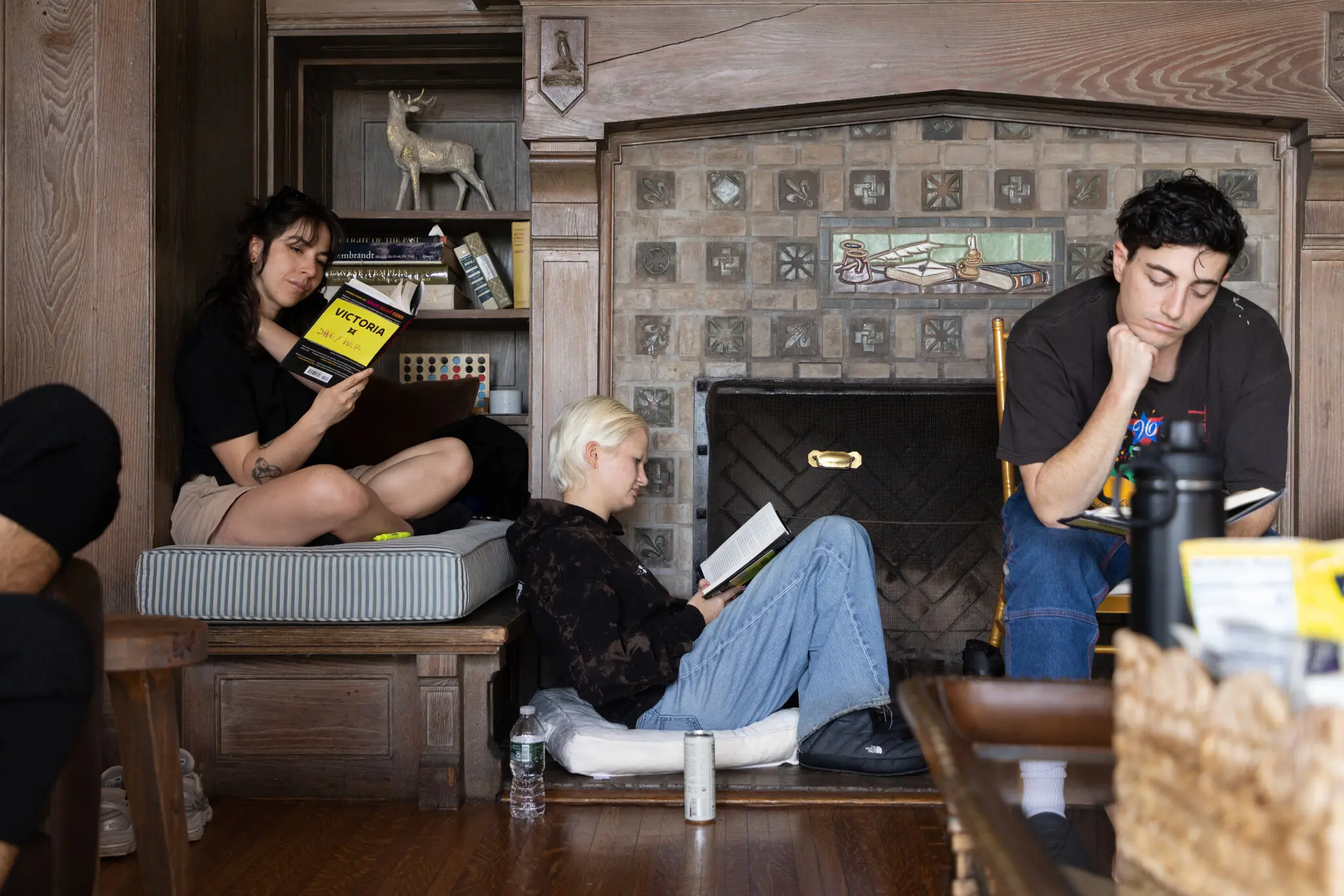
From left: Victoria Cuenca, Max Pittman and Mikey Friedman, the founder of Page Break.
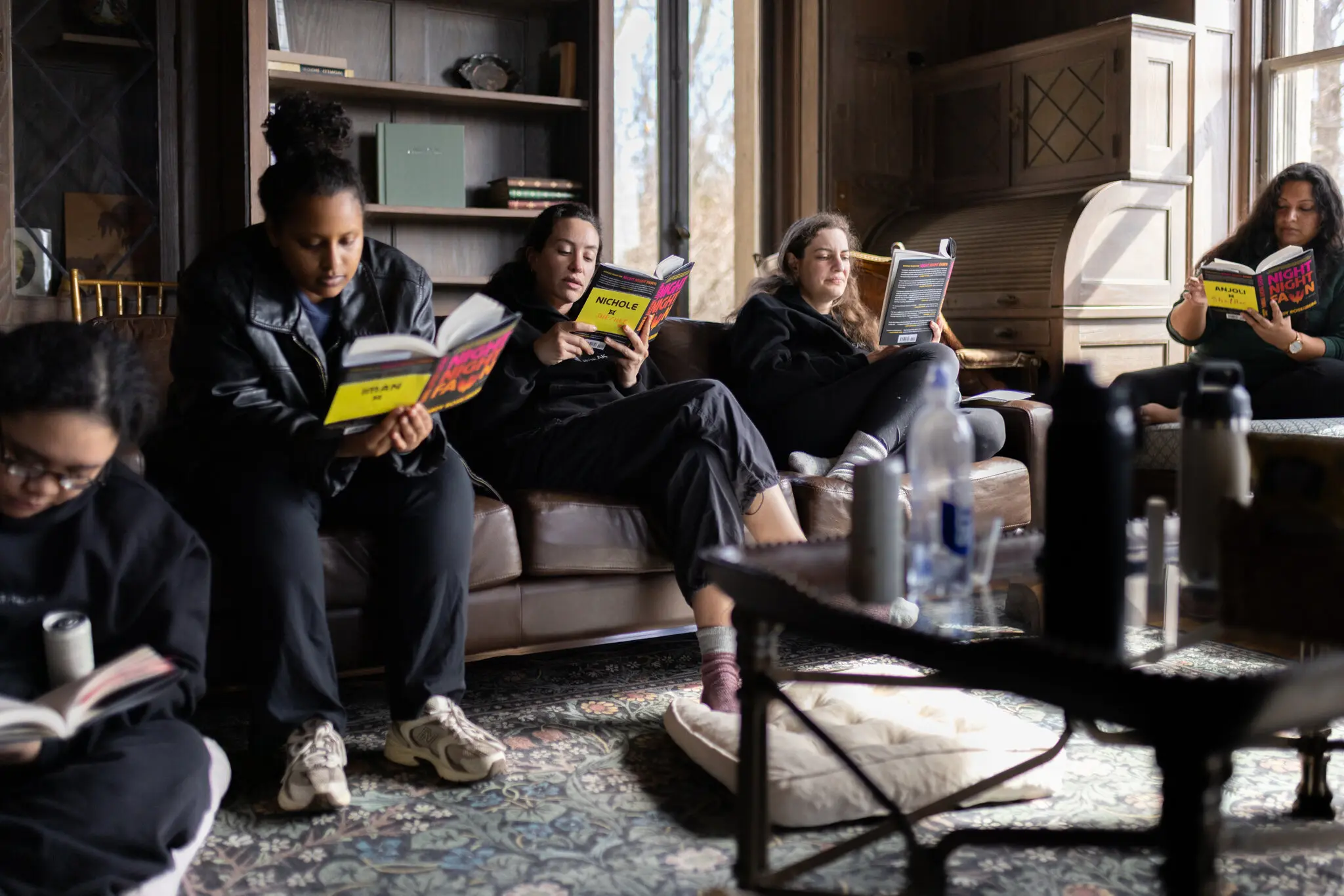
Also reading: Christa Lei Sonido, Iman Ahmed, Nichole Fratangelo, Melissa Diamond and Anjoli Anand.
I’d heard about Page Break from a
colleague who’s plugged into the Brooklyn literati and their ways
(well-cured tote bags, pour-over coffee, novels as “projects”). My beat
tends to be more Jersey Shore/airport bookstore (cheery caftans, wine
o’clock, aspirational settings). But I signed up for this artisanal
retreat because I love reading aloud and being read to, and I welcomed the idea of reading a whole novel in turns over one weekend.
The
rest — including chef-prepared meals and wine pairings — was gravy. The
cost ranged from $950 to $1,300, depending on whether you were willing
to share a bedroom or bathroom. (I was not.) One half-price spot on each
retreat is reserved for a reader who is queer, trans or a person of
color.
For an icebreaker, we said our names,
pronouns and what we’d choose for a last meal — a nod to Rosenberg’s
book, which is about a dying woman. Mikey said matzo ball soup; someone
else said mujadara; I said chocolate cake.
Just
as I was getting stressed about how long I’d have to sit in that
unforgiving chair (495 minutes, or eight hours and one bruised tailbone
later, by my calculations), Mikey announced that Jordy Rosenberg would
be joining us to discuss “Night Night Fawn” on Sunday. The group was
thrilled, as was I. Until I glanced at the dining table and saw … more
gold chairs.
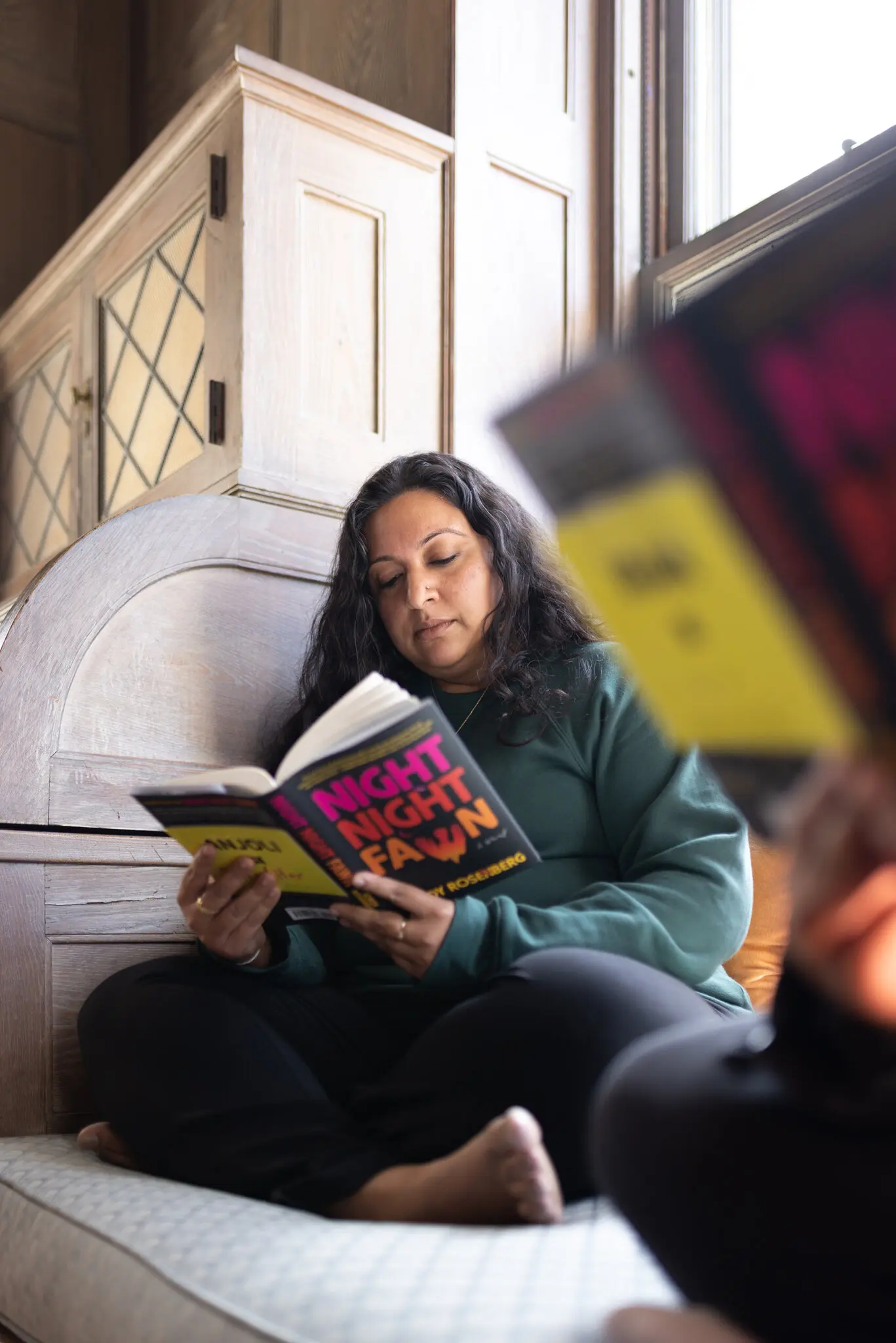
Anjoli Anand said she appreciated the chance to not think about work.
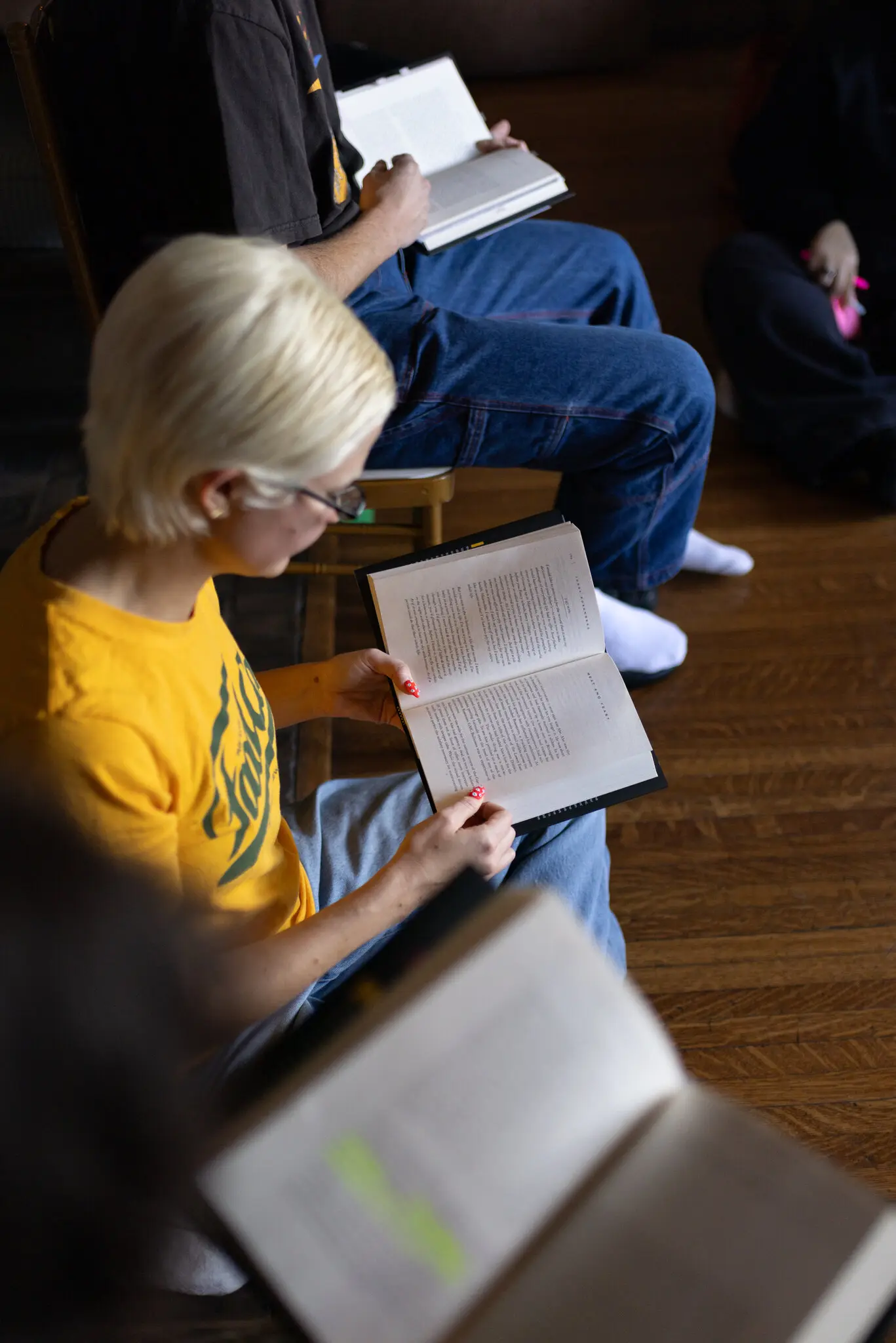
Reading aloud was emphasized, but there were interludes of quiet reading as well.
I started to relax when we dove into our
first 90-minute reading session, with each attendee taking two pages at a
time. If a sentence continued to a third page, you were supposed to see
it through to the end. If you wanted to skip a turn, no biggie.
“Do you, hun,” Mikey advised.
Their
voices were sonorous and hesitant, accented and theatrical. One sounded
like my fifth-grade teacher reading “The Wind in the Willows.” Another
was a dead ringer for the person who announces side effects at the end
of a medicine commercial, but slower and not smug. My favorite called to
mind my sister, who read to me before I knew how.
Mikey, a former camp counselor, paused
every dozen or so pages to gauge our reactions. Right off the bat, Page
Breakers were critical of the novel’s protagonist, Barbara, a lifelong
New Yorker who’s looking back on life through an Oxy haze, railing about
old slights and her estranged trans son.
“My daughter,” she asks unkindly, “what have you become?”
I
announced my hope that Barbara would soften by the end of the book. As
the only parent in the room, to the best of my knowledge, I felt
qualified to make this prediction. How could a mother spurn her child?
The group nodded thoughtfully, as book people do.
For
our second session, we migrated (thankfully) to Arrow Park’s library,
where I nabbed a cushy spot on a leather couch beside a window crawling
with ladybugs.My homesickness disappeared with the sun.In
spite of the chairs, dinner was a warm, celebratory affair. The chef,
Charles Raben, served chicken schnitzel, pickled green tomatoes and
borscht, all inspired by the novel, while Mikey circled the table,
refilling wine glasses. Conversation flowed.
I
skipped the bonfire hang. I skipped yoga, too, although I heard the
instructor encouraging students to imagine their bones as hollow vessels
— a lovely image for readers. I slept better than I usually do in a new
place, possibly because I read another book for five hours before
finally switching off my lamp.
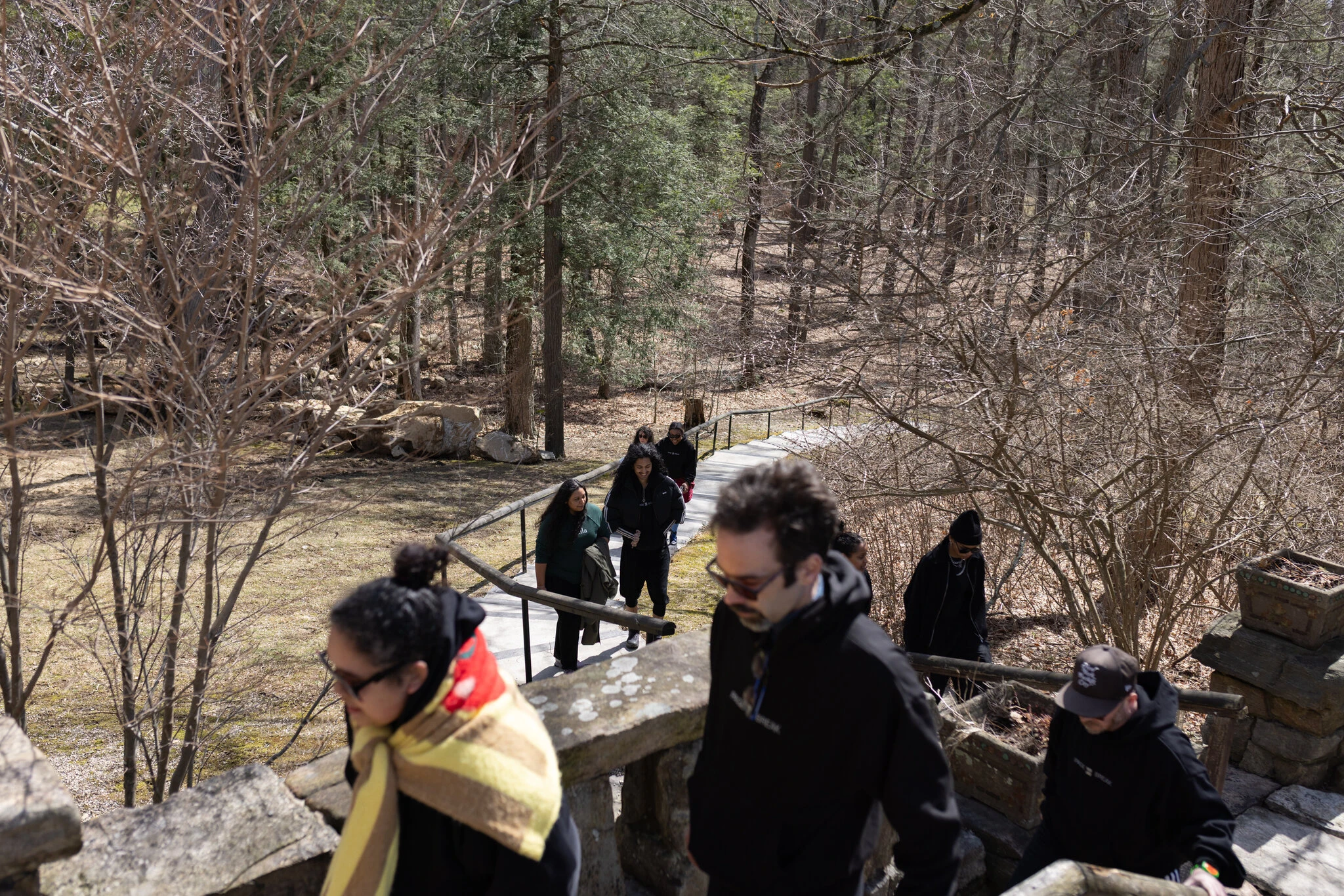
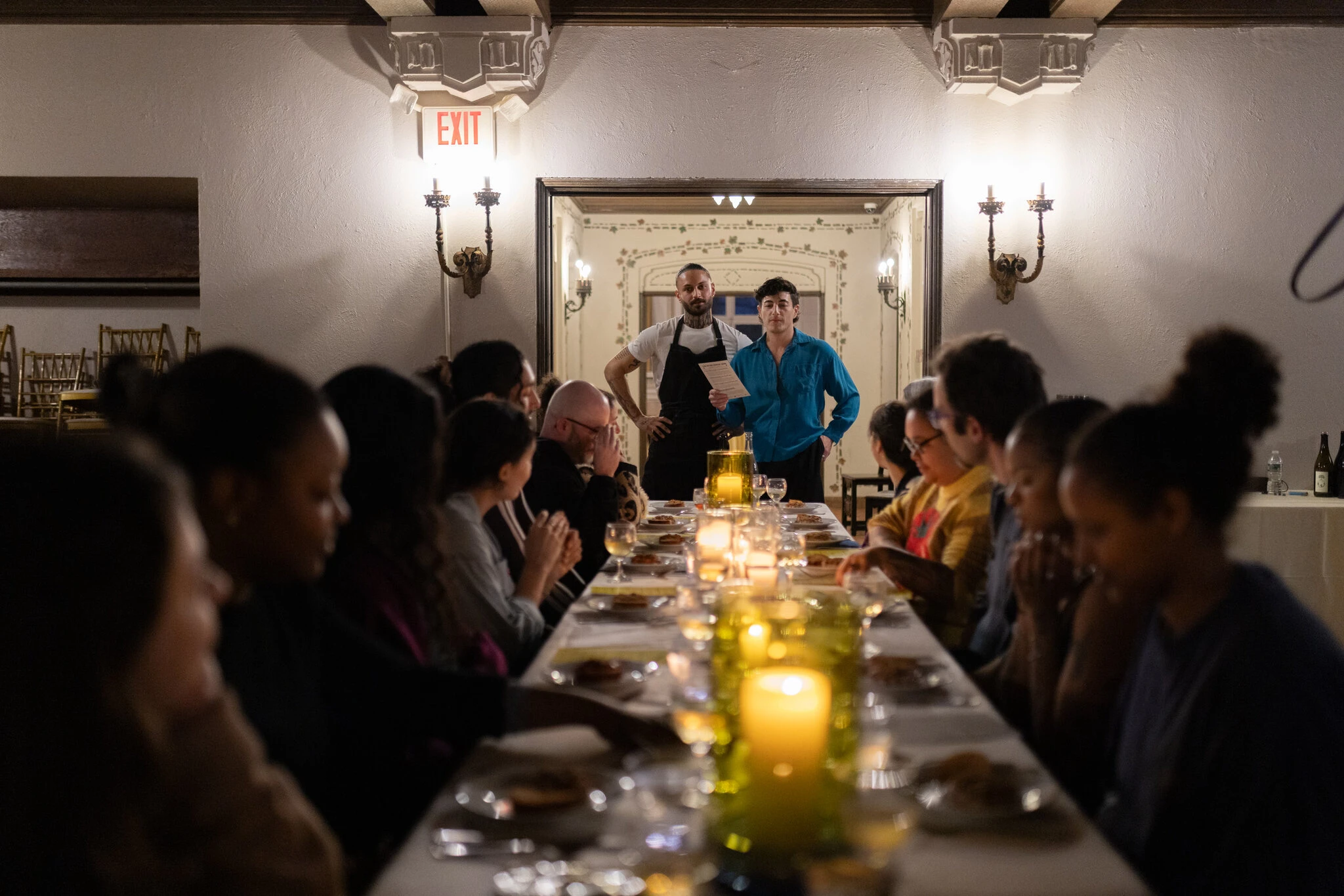
Held at Arrow Park, an 85-acre
estate, the retreat included a hike and concluded with a candlelight
dinner prepared by a visiitng chef.
On Saturday, after more reading, more
discussion and a leisurely group stroll, I chatted with Mikey about the
genesis of Page Break. He was working in advertising when he came up
with the idea. He’d pondered a book club but got hung up on the same
issues I’d been mulling on my drive: What if he didn’t like the book?
What if the reading felt like homework?
Then he stumbled upon research conducted by The Reader,
a British charity, showing that adults feel 90 percent more connected
to one another after reading aloud together, and that their reading
comprehension is higher. (I will debate this point, having read all
seven Harry Potter books to my son and still barely knowing who
Dumbledore is.)
In 2023, Mikey tested his mini-club concept with seven friends at a cabin near New Paltz, N.Y., where they read “Open Throat,” by Henry Hoke.
“I
saw a completely different side of the group,” he said. “Reading aloud
is this small act of vulnerability that immediately makes you feel like
you can trust other people.”
Nineteen retreats later, he has learned
that he doesn’t need a guest moderator and does need a cook. He picks
mostly debut novels of reasonable length by queer and New York-based
authors who can travel easily to retreat locations, which vary. He
allows pairs or trios to attend together; bigger groups prevent a
retreat from “vibing.”
When I asked
(twice) if he’s had a problematic guest, he insisted that the worst he’s
encountered are loquacious readers who need to be reminded to share the
floor.
Mikey was not going to spill
the tea on his readers; their privacy is part of what makes Page Break
special. Indeed conversation around “Night Night Fawn” quickly meandered
to intimate territory, with readers sharing personal stories involving
religion, politics, gender and sexuality.
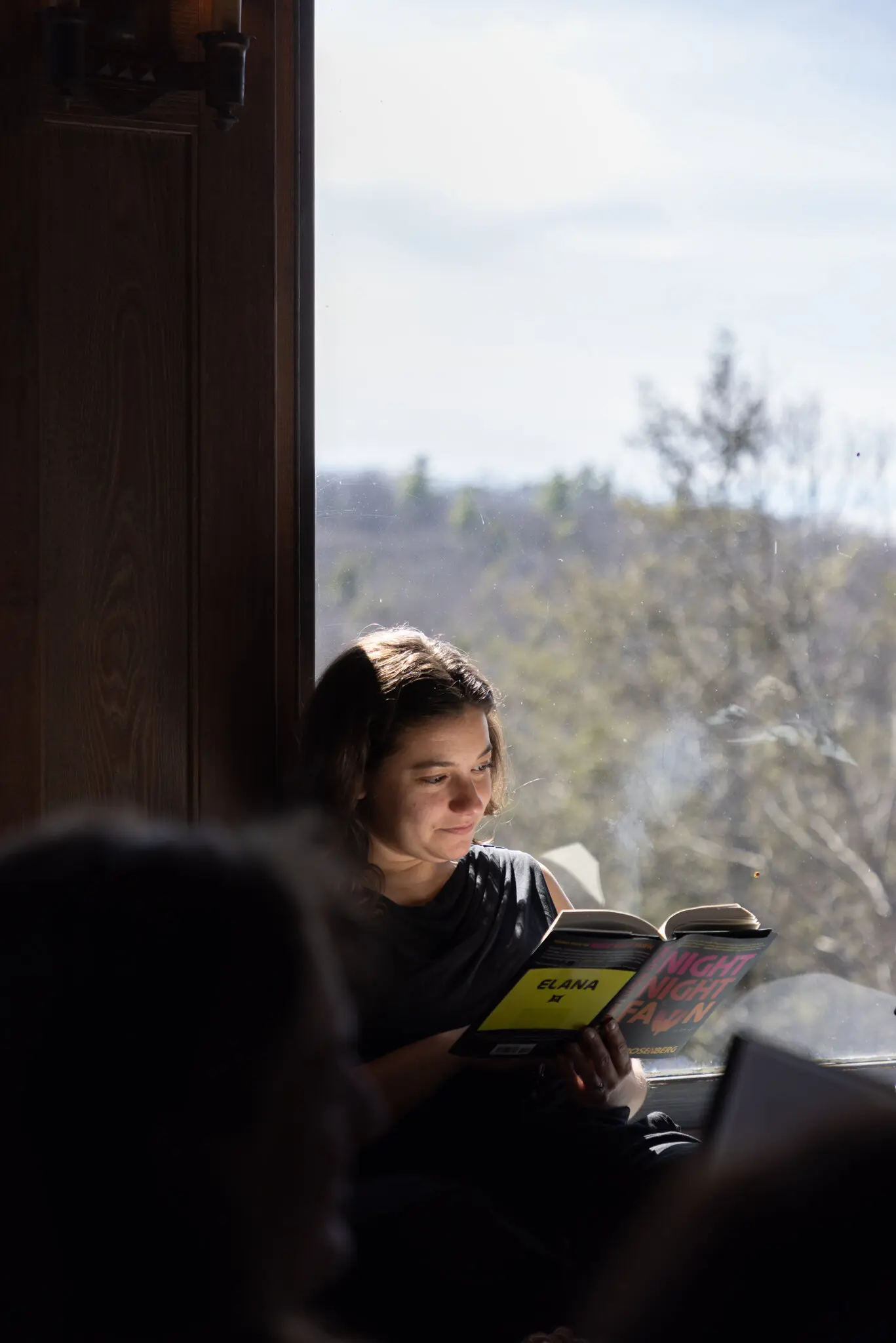
The attendees ranged in age from 25 to 55, and included Elana Van Patten...
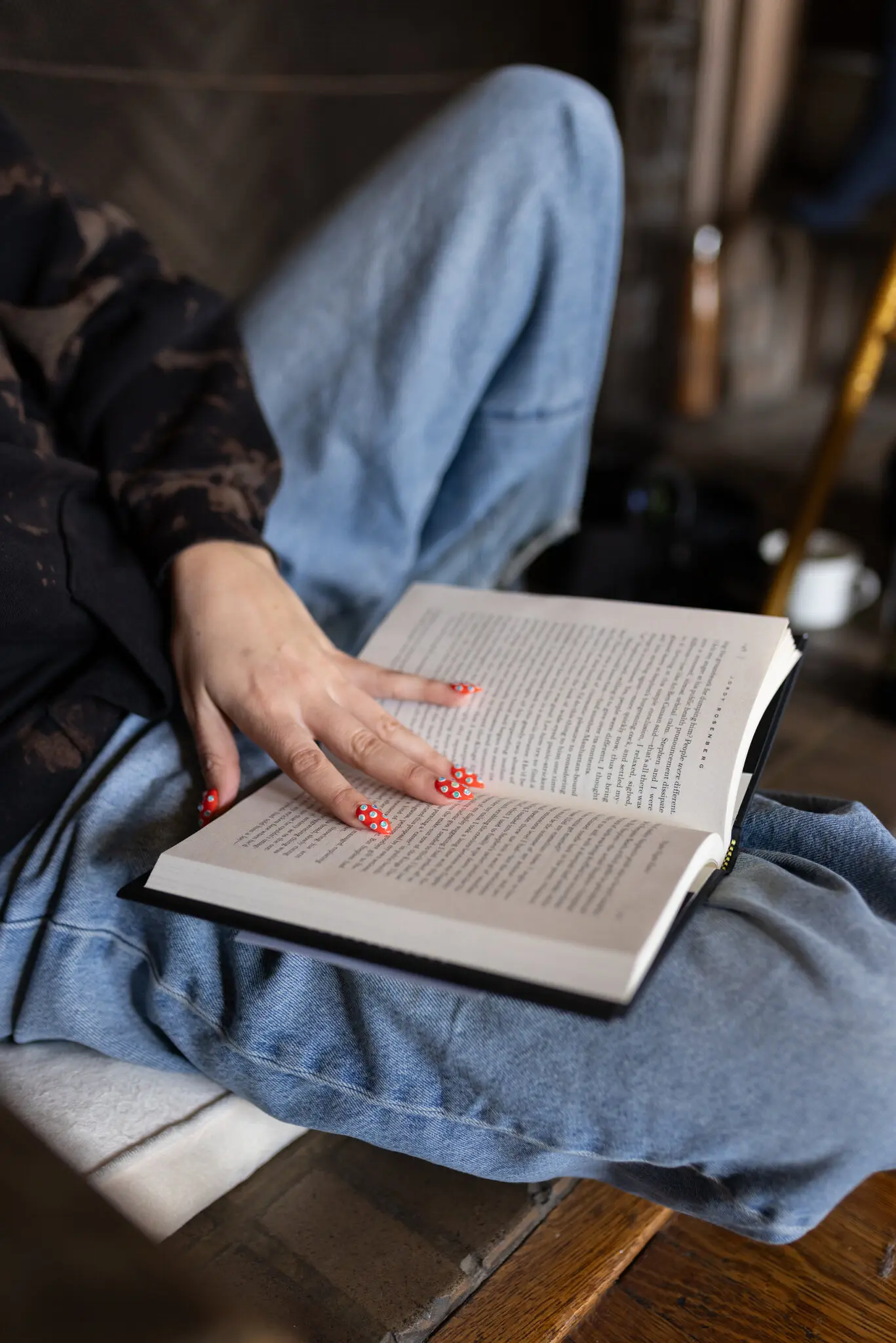
...and a freshly manicured Max Pittman.
Our group ranged in age from 25 to 55. They came from Manhattan,
Brooklyn, Queens, Syracuse and Arlington, Va. They wore Doc Martens, New
Balance sneakers, Columbia hiking boots, Birkenstocks and North Face
slippers. They had faded tattoos and fresh manicures. (Note to self:
Pointy is in, square is out.) There were two couples and one pair of old
friends.
They came for a variety of reasons and, like me, discovered a comfortable place to unwind.
Anjoli
Anand, who works for a medical humanitarian organization, said: “I
travel quite a lot, confronting what we’ve done to this planet and to
each other. This was a nice opportunity to think about different
things.”
Iman Ahmed, a software engineer, said, “It’s like Socratic seminars in English class, but make it summer camp.”
Griffin Hansbury, a psychoanalyst and author, signed up for Page Break with his partner,
Rebecca Levi, a digital design recruiter and visual artist, to celebrate
their 25th anniversary.
“It’s like a mindfulness weekend, meditative and immersive,” he said.
Levi
said: “This feels more personal than being read to by an audiobook.
It’s like being read to by a loved one, in a holding environment, where
everything is being taken care of for you.”
By
the afternoon of the second day, I recognized every attendee's voice
without looking up from my book. By Saturday dinner (a five-course
tasting menu, truly divine), I worried I was one of the people Mikey
would ask to pipe down.
But I also listened. Several readers
spoke about what it was like to come out — as gay, as trans, as
nonbinary, as fully realized and self-actualized humans — to family
members who wouldn’t hear it. In real life as in fiction, unconditional
love turns out to be more of a precious resource than I realized.
Eventually I stopped momsplaining the character of Barbara, who — spoiler alert — proved irredeemable.
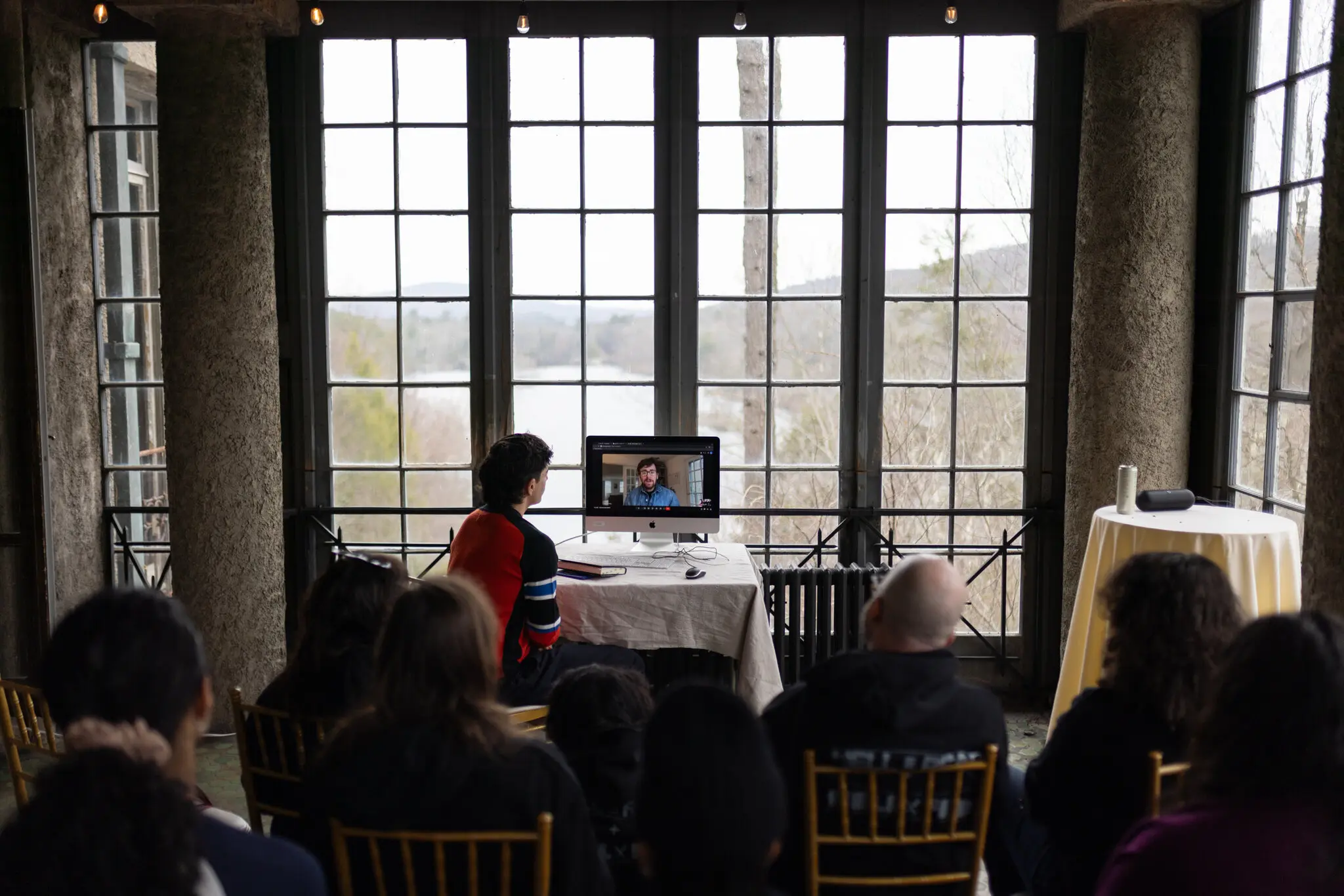
Jordy Rosenberg took questions from the group by Zoom on the final day.
On Sunday morning, after reading a
32-page chunk on our own (my least favorite part of the weekend) we
returned to the library to finish the book together. Now we each took
one page at a time, our pace quickening as Barbara neared death. The
gentlest among us skipped a turn, citing a dry throat. My favorite voice
read the final page, hitting just the right note of solemnity and
triumph.
Then the room went quiet. The
heaviness reminded me of a long-ago stint on jury duty, of the hush
that fell when we reached a verdict at the end of a six-week trial.
Fourteen years later, I barely remember the plaintiff or defendant, but
I’d know those jurors anywhere. As with Page Break, they went from
strangers to people with whom I’d shared an experience that felt
important. People whose stories stick with me, as will “Night Night
Fawn.”
It turned out that Jordy Rosenberg wasn’t
able to make it to Arrow Park after all. Instead he Zoomed in via a
wonky internet connection while we gathered in a sunroom littered with
dead ladybugs and asked questions about the book. This was oddly, almost
comically anticlimactic, like a wedding ceremony after a too-fun
rehearsal dinner (right down to the chairs).
Mikey,
ever a gracious host, made sure everyone had clear sightlines and
assured Rosenberg that we could hear him even when he was briefly
frozen.
When the call ended, Mikey said, “Slay.”
I agreed.
Elisabeth Egan is a writer and editor at the Times Book Review. She has worked in the world of publishing for 30 years.
A version of this article appears in print on April 4, 2026, Section C, Page 1 of the New York edition with the headline: With 16 Strangers, 304 Pages to Read Aloud. Order Reprints | Today’s Paper | Subscribe
For information on Page Break